Sustainable Energy and Climate Action Plan of the Municipality of Aosta
The Municipality of Aosta approved its accession to the Covenant of Mayors with City Council Resolution No. 92 of 23/10/2019, committing to prepare the Sustainable Energy and Climate Action Plan – SECAP of the Municipality of Aosta in order to achieve the following objectives:
- Reduction of CO₂ emissions by at least 40% by 2030 compared to the emissions inventory of the baseline year, particularly through improved energy efficiency and greater use of renewable energy sources;
- Increasing resilience by adapting to the effects of climate change through specific adaptation actions;
- Sharing their vision, results, experience, and know-how with other local and regional authorities in the EU and beyond, through direct cooperation and peer-to-peer exchange, particularly within the framework of the Global Covenant of Mayors.
The SECAP of the Municipality of Aosta is composed of three sections: the municipal inventory of energy consumption and CO₂ emissions (BEI – Baseline Emission Inventory), including the framework of risks and vulnerabilities affecting the municipal territory; the Action Plan for decarbonization; and the Action Plan for adaptation, which collects the main adaptation actions identified at the local level.
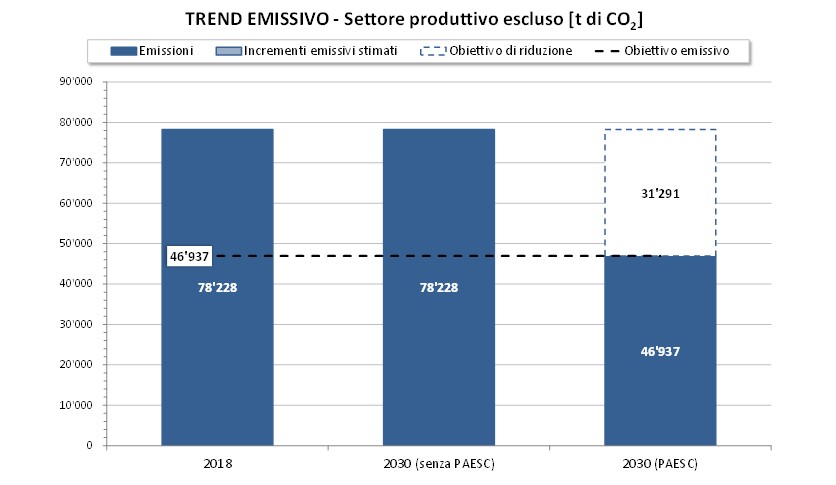
For the Municipality of Aosta, the 2030 CO₂ emission reduction target was calculated with the BEI set to 2018. The decision was made to pursue a 40% absolute reduction in emissions, excluding the industrial sector. In particular, the estimated reduction to be achieved by 2030 amounts to 31’291 tonnes of CO₂.
In order to reach the established CO₂ emission reduction target, it is necessary to act on reducing energy consumption, increasing the use of renewable energy sources, and improving the energy efficiency of the existing building stock, both public and private. This must also be accompanied by broad involvement of the population, through awareness-raising initiatives, participation in projects, and the dissemination of good practices and more conscious and sustainable lifestyles.
The energy and emissions context of Aosta, excluding the industrial sector, shows the residential sector as the dominant contributor. Considering energy consumption by energy carrier, renewable energy sources prevail, particularly biomass, while the main source of emissions is natural gas.
The main themes on which the SECAP of the Municipality of Aosta has been built are:
- Promoting sustainable consumption and production models;
- Improving the energy and environmental performance of the existing building stock;
- Promoting sustainable and electric mobility;
- Creating and strengthening citizens’ capacity to adapt to climate change.
For the mitigation section, the key sector for achieving the CO₂ emission reduction target is the residential sector, for which the following actions are planned:
- Improving the energy efficiency of the existing building stock to reduce consumption;
- Installing systems powered by renewable energy sources;
- Technological upgrades, including replacing existing appliances and boilers with more efficient equipment to reduce energy consumption;
- Attention to the forest–wood supply chain.
Within the climate adaptation section, the framework of municipal risks and vulnerabilities is defined based on documents such as the Municipal Civil Protection Plan, the Municipal Master Plan, the Regional Forest Fire Plan, data provided by Arpa Valle d’Aosta, and the Report on Climate Change in Valle d’Aosta. The analysis highlighted that the main climate risks affecting the Aosta territory include the general increase in temperatures, the occurrence of extreme weather events, and changes in precipitation patterns.
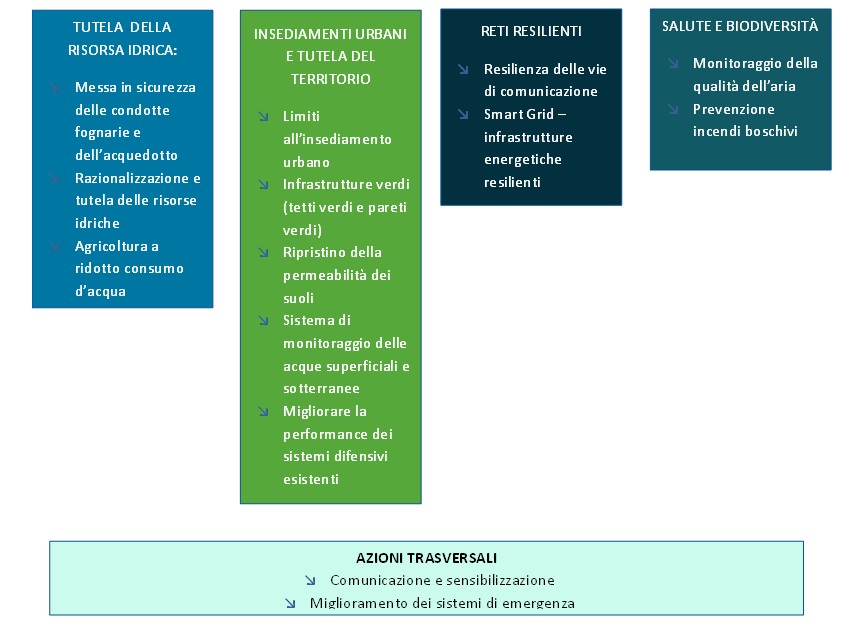
The Plan includes 14 adaptation actions, designed to achieve general and specific objectives at the local level, with reference to the different sectors affected by climate change. The proposed actions take into necessary account the scope of intervention of the Municipal Administration, both direct and indirect, including actions of guidance, influence, and awareness-raising that the Administration can promote.
Two cross-cutting actions were also identified: public awareness-raising and improvement of the emergency response system.
THE ROLE OF TERRARIA
TerrAria was responsible for developing the 2018 inventory of energy consumption and emissions, through the integration of local datasets provided by the Municipal Administration with regional and national databases. Once the municipal emissions framework had been defined, TerrAria supported the Municipality in selecting the 2030 CO₂ emission reduction target and in identifying the actions required to achieve it through energy savings, reduced consumption, and increased use of renewable energy sources.
TerrAria also defined the framework of climate-related risks affecting Aosta and worked together with the Municipal Administration to identify the adaptation actions needed to improve the Municipality’s response to these risks, acting on climate change adaptation, public engagement, and increasing citizens’ awareness.