Sustainable Energy and Climate Action Plan of the Municipality of Varese
The Municipality of Varese approved the Sustainable Energy and Climate Action Plan (SECAP) on 31/07/2021. The SECAP of the Municipality of Varese includes two central components and a cross-cutting element related to energy efficiency and the increased use of renewable energy sources:
- Mitigation, aimed at reducing CO₂ emissions
- progressively decarbonizing territories (an objective already included in the SEAP);
- Adaptation, aimed at reducing climate risks related to climate change (a new objective introduced with the SECAP).
The SECAP of the Municipality of Varese is composed of three sections: the municipal energy and emissions inventory of energy consumption and CO₂ emissions (BEI – Baseline Emission Inventory), including the framework of climate risks and vulnerabilities affecting the municipal territory, the Action Plan for decarbonization and the Action Plan for adaptation.
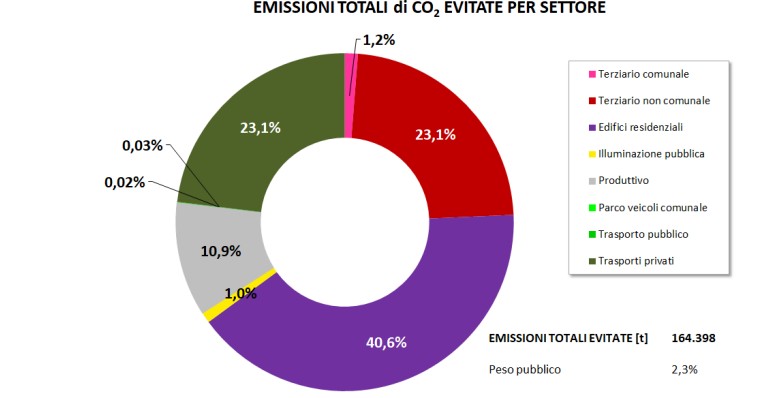
After analyzing the context of consumption and emissions, the objective of the SECAP of Varese was determined including the industrial sector and expressed in absolute terms, with a 40% reduction in emissions recorded in 2017 to be achieved by 2030, corresponding to approximately 164’398 tonnes of CO₂.
In 2023, the first SECAP Monitoring Report was carried out, for which a new energy and emissions inventory updated to 2021 was prepared.
From the analysis of consumption for both reference years, the non-municipal tertiary sector emerges as the dominant sector, both in terms of energy consumption and emissions. In terms of energy carriers, natural gas is responsible for the majority of both consumption and emissions. Between 2017 and 2021, the reduction in emissions was not particularly significant, as not all the planned actions had been completed and the analyzed time frame was strongly influenced by the COVID-19 pandemic period.
With regard to the mitigation pillar, the objectives of the SECAP of the Municipality of Varese include:
- Maximum commitment by the Municipal Administration to improve the energy efficiency of publicly owned buildings, including energy-saving measures and the efficiency improvement of municipal public lighting;
- Increase in the supply of energy from renewable sources;
- Promotion of sustainable mobility;
- Engagement of citizens and actors from the tertiary and industrial sectors through awareness-raising initiatives;
- Expansion and improvement of the district heating network.
The analysis of the climate adaptation context for the Municipality of Varese was conducted through the examination of materials provided by the Municipal Administration, from which an objective climate risk assessment emerged. In addition, several consultation meetings with experts and citizens were held, from which a subjective risk assessment was derived. By comparing these two analyses and the sensitivities identified within the territory, the main climate risks affecting the Municipality of Varese were identified.
Three types of actions were defined: excellence actions, strategic actions, and plan actions. Among the strategic actions are the identification of a Renewable Energy Community (REC) and the planning of sustainable mobility, particularly electric mobility. Among the excellence actions are the energy efficiency improvement of the public building stock and the provision of financial incentives for replacing obsolete boilers with more efficient systems in the residential sector.
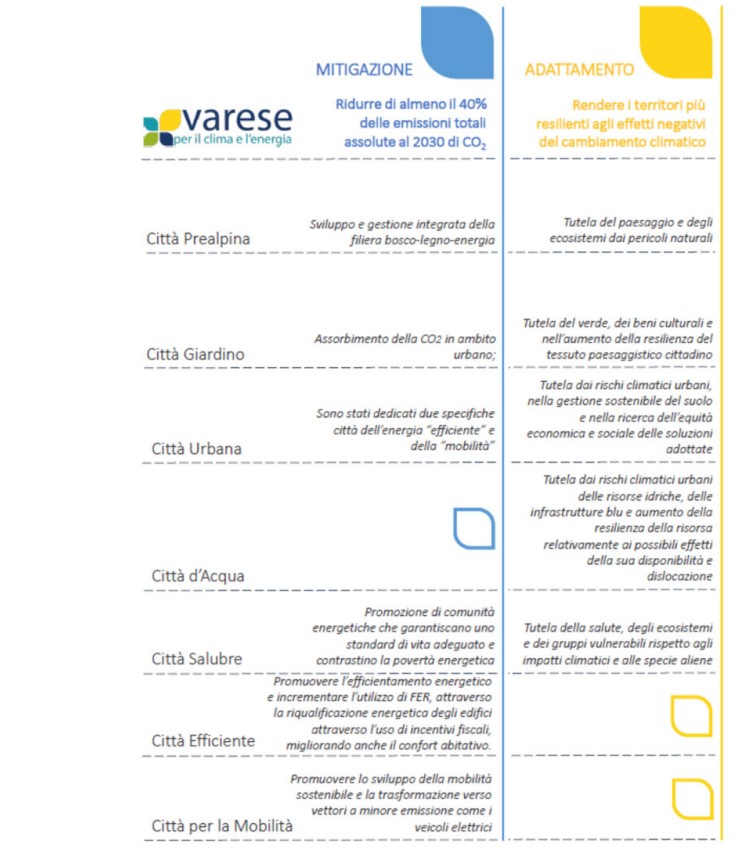
Based on the territorial analysis carried out—addressing the distinctive characteristics of the municipal territory with reference to mitigation and adaptation aspects—and on the risk and vulnerability analysis, seven key dimensions for the City of Varese were identified, each corresponding to a characterizing city profile: The Pre-Alpine City, The Garden City, The Urban City, The Water City, The Healthy City, The Efficient City and The City of Mobility. For each of these profiles, specific mitigation actions and, where possible, adaptation actions were identified.
THE ROLE OF TERRARIA
Throughout the entire process of defining and drafting the SECAP of the Municipality of Varese, TerrAria supported the Municipal Administration and the other members of the working group in identifying critical issues, strengths, and specific sensitivities of the Varese territory. TerrAria was responsible for developing the energy and emissions inventories, integrating the data provided by the Municipal Administration with regional and national databases. It also collaborated in defining the CO₂ reduction target and in shaping the strategic vision aimed at achieving this objective.
This process included the development of citizen engagement and awareness pathways, as well as the identification of specific actions aimed at reducing energy consumption, increasing the diffusion of renewable energy sources, and improving the energy efficiency of the existing building stock, while also enhancing public awareness and the capacity to adapt to climate change.