Knowledge Platform of the sectoral plans of the Urban Sustainable Mobility Plan and related Strategic Environmental Assessment (SEA)
The Urban Sustainable Mobility Plan of the Metropolitan City of Turin is developed through the integration of three sectoral plans: the Urban Sustainable Logistics Plan, the Biciplan and the Accessibility and Intermodality Plan.
It is a strategic urban planning instrument aimed at developing a medium- to long-term strategic vision of the urban mobility system, pursuing environmental, social and economic sustainability objectives by defining actions to improve the effectiveness and efficiency of the urban sustainable mobility system and its integration within the territorial structure and development.
The Urban Sustainable Mobility Plan is essential for better managing the urban sustainable mobility system in an integrated way by incorporating strategies for traffic management, public transport and sustainable urban mobility. It also represents a key component of integrated urban planning. The objectives identified by the Urban Sustainable Mobility Plan are:
- Effectiveness and efficiency of the mobility system
- Energy and environmental sustainability
- Road safety
- Socio-economic sustainability.
The aim of the Urban Sustainable Logistics Plan is to define strategies for the sustainable transport of goods within the logistics sector, both for consumer goods distribution and for industrial logistics, thereby contributing to urban mobility planning.
The Biciplan aims to plan the development of cycling mobility and represents the reference instrument for implementing the sustainable urban mobility strategies of the Urban Sustainable Mobility Plan, namely:
- Reducing emissions from vehicular traffic
- Improving accessibility to urban and territorial areas
- Promoting active and healthy forms of mobility such as cycling and walking.
The Accessibility and Intermodality Plan, on the other hand, provides a detailed framework for the development of measures related to public transport and the corresponding intermodal systems, strengthening integration between the different transport modes within urban mobility planning. Common to the three sectoral plans is the Knowledge Platform.
Specifically, the Platform aims to represent the environmental and programmatic context within which the contents of the three sectoral plans of the Urban Sustainable Mobility Plan are developed, namely the basic knowledge elements useful first for guiding and subsequently for evaluating their level of integration (environmental, programmatic and socio-economic). It constitutes a substantial annex to the reports (preliminary and environmental) that are made available within the framework of the Strategic Environmental Assessment (SEA) procedures and the , Appropriate Assessment (AA) concerning Natura 2000 Network sites related to the three plans.
The knowledge framework emerging from the Knowledge Platform is complementary and synergistic with the specific analyses and sectoral studies developed within each of the three Plans for urban mobility planning.
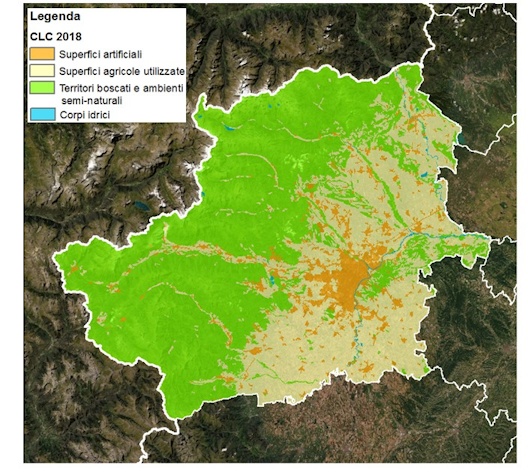
The Knowledge Platform is structured into two distinct sections: the first section concerns the description of the environmental components that characterize the territorial context of the Metropolitan City of Turin, in order to highlight elements of sensitivity and criticality, as well as assets and resources, which are taken into account in the formulation of the three Plans; the second section focuses on the development of the programmatic reference framework, namely the “mapping” of the system of policies, plans and programs to which the contents of the three plans must refer in order to establish the most appropriate forms of coherence, synergy and integration.
THE ROLE OF TERRARIA
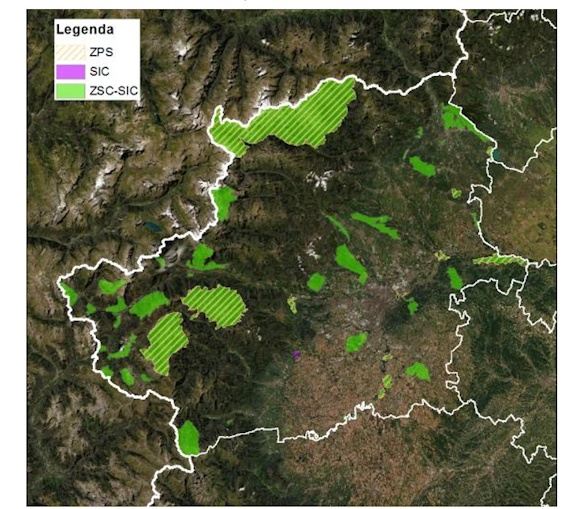
TerrAria’s role in the drafting and approval of the Urban Sustainable Mobility Plan consisted in preparing the Knowledge Platform common to the three sectoral plans and the Strategic Environmental Assessment documentation for the three Plans, as well as the Appropriate Assessment concerning Natura 2000 Network sites.
In particular, the Strategic Environmental Assessment aims to evaluate in advance the environmental consequences of strategic decisions and can therefore also be considered a tool for systematically integrating environmental considerations into the development of policies, plans and programs. The Strategic Environmental Assessment analyzed the environmental context within which the three Plans are implemented, also assessing their interactions with other sectoral plans or programs, whether of higher hierarchical level or of equal rank.