Calculation of the carbon footprint and greenhouse gas emissions for Carbofer Tecnologie S.p.A.
Carbofer Tecnologie S.p.A. is an Italian company headquartered in Brescia, operating since 1987 in the steel sector and specialising in the processing, production and marketing of carbon-based materials, wire rod and related products for steelworks. The company operates through two main production sites in the Province of Brescia: Gianico and Pian Camuno. It supplies raw materials for steel mills, including vegetable and fossil coals, carbon derivatives and ferroalloys, using innovative technologies for customised grain size, packaging and flexible logistics. Carbofer also manages the treatment and recovery of non-hazardous special waste, operating authorised plants equipped with emission abatement systems and scheduled maintenance programmes, thereby contributing to the ecological transition processes of the steel industry.
For a manufacturing company such as Carbofer Tecnologie S.p.A., operating in the steel sector, Product Carbon Footprint (CFP) analysis represents a strategic tool to support ecological transition. It enables standardised quantification of greenhouse gas emissions, expressed in CO₂ equivalent, associated with the entire life cycle of products such as anthracite, metallurgical coke, artificial graphite or wire rod. For carbon-based materials, the Product Carbon Footprint assesses the entire production process, starting from the extraction of fossil or vegetable raw materials and upstream transport, evaluating on-site processes and packaging impacts, as well as downstream transport.
Within the European and Italian regulatory framework, the quantification of greenhouse gas (GHG) emissions is encouraged by Directive 2014/95/EU (transposed by Legislative Decree 254/2016), relating to the analysis of companies’ environmental impacts in order to accelerate the ecological transition. The UNI EN ISO 14067:2018 standard governs Product Carbon Footprint, while UNI EN ISO 14064-1:2019 regulates Organisational Carbon Footprint (CFO), incorporating the GHG Protocol to ensure standardised and third-party verifiable calculations.
The Product Carbon Footprint process is structured into several phases, including definition of the study objective and system boundaries, collection of input and output data related to the product under assessment, calculation of emissions expressed in CO₂ equivalent, and preparation of the final report.
GHG analysis, by contrast, covers the total greenhouse gas emissions generated by the company, divided into Scope 1 (direct emissions, e.g. gas-fired boilers), Scope 2 (indirect emissions from imported energy) and Scope 3 (value chain emissions, e.g. supplier transport or product use). For a manufacturing company, determining GHG emissions facilitates decarbonisation plans, such as investments in photovoltaic systems or electric logistics solutions, reducing operating costs and regulatory risks. Together, Product Carbon Footprint and GHG analysis promote overall sustainability, strengthening corporate resilience and attractiveness for ESG-oriented investors.
The GHG assessment includes the following phases: definition of the study purpose, determination of organisational and operational boundaries, identification of the main emission sources within the company, collection of consumption data and emission factors, calculation of emissions and preparation of the final report.
THE ROLE OF TERRARIA
TerrAria, with over ten years of experience in energy efficiency and energy management, prepares GHG and Product Carbon Footprint reports for manufacturing companies, supporting them in their ecological transition pathways, starting from preliminary analyses, definition of the study scope and data collection and processing.
Specifically, for Carbofer Tecnologie S.p.A., TerrAria carried out both the GHG and Product Carbon Footprint analyses. The GHG analysis made it possible to assess trends in CO₂ equivalent emissions for each activity category within the scopes defined by the GHG Protocol (stationary combustion, mobile combustion, fugitive emissions from air conditioning systems and purchased electricity). It also enabled evaluation of the company’s environmental efficiency over the years by comparing total GHG emissions with output production volumes.
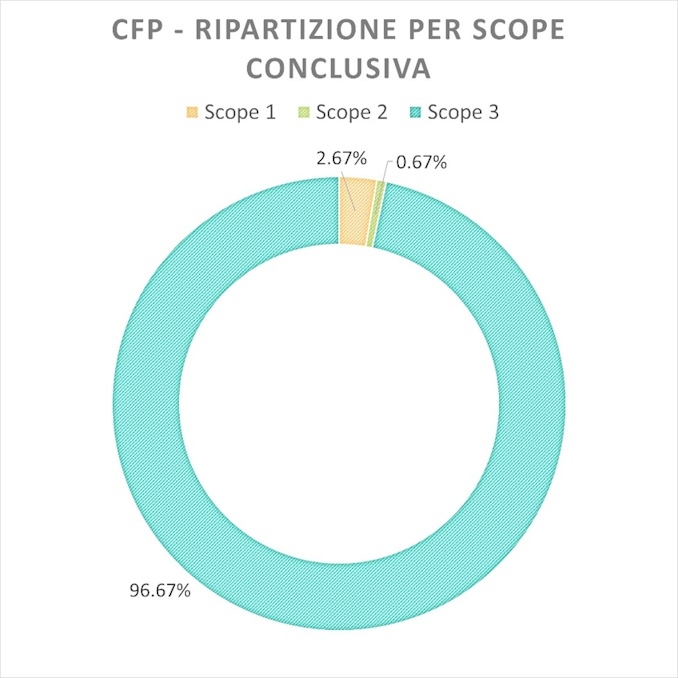
With regard to the Product Carbon Footprint, it was possible to quantify the total greenhouse gas emissions, expressed in tonnes of CO₂ equivalent, attributable to each inventory category of the CFP, including purchase and transport of raw materials, inter-site transport, packaging and packing materials, outbound product transport, employee business travel and visitor travel, waste transport and disposal, outsourced processing transport, and water consumption.