Climate study of the Apulia Region
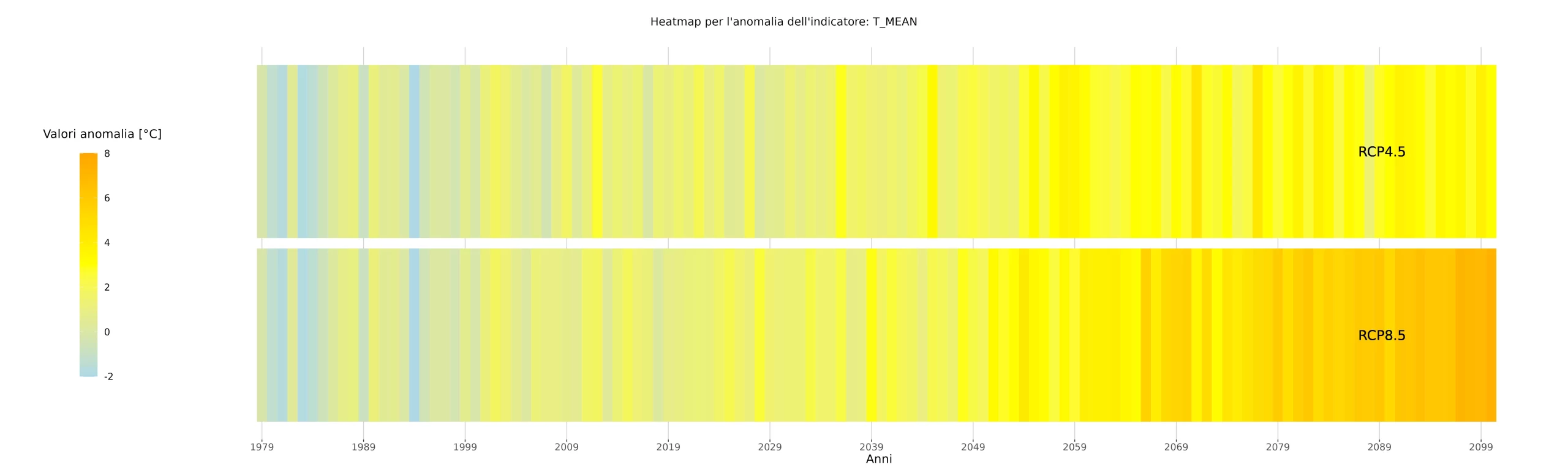
The document of Guidelines for drafting the Regional Strategy for Adaptation to Climate Change of the Apulia Region provides an analytical framework of the regional climate scenario, both present and past (through the analysis of rainfall and temperature data over the last 30 years), as well as future climate projections for the next 100 years, developed using meteorological model simulation databases provided by Euro-Mediterranean Center on Climate Change.
The outputs produced represent an analysis of the knowledge framework related to climate in Apulia, with significant strategic and cross-sectoral value across broader areas of application at the regional level. For the first time, a detailed and in-depth local-scale climate study has been carried out in Apulia.
The study assesses the main hazards related to climate change in the Apulia context, proposing a set of adaptation actions classified according to the territorial scope analyzed.
By analyzing the territory of Apulia through the review of existing planning instruments and the various available bibliographic sources, it was possible to identify eight priority hazards for the region: Floods; Waterlogging; Landslides; Drought; Wildfires; Water security; Heatwaves; Coastal erosion.
The analysis of climate risks associated with these hazards necessarily involves the characterization of current hazard levels and the assessment of their future variations, linked to changes in climate change indicators.
For each main hazard affecting the Puglia Region, the future climate risk has been assessed, considering how climate change may influence the risk currently identified in existing planning instruments, based on the future evolution of the hazard according to the analyzed IPCC – Intergovernmental Panel on Climate Change scenarios.
The study findings confirm the ongoing phenomenon of climate change, with rising temperatures and anomalous rainfall patterns compared to the past. To counteract and address climate change, it is necessary to initiate adaptation processes in order to anticipate adverse effects and adopt appropriate actions to prevent or minimize potential damage, or to seize emerging opportunities.
The study takes as a reference the actions selected in the National Plan for Adaptation to Climate Change, which are associated with five “macro-categories” specifying their design typology: information, organizational and participatory processes, governance, upgrading and improvement of plants and infrastructure, nature-based solutions (including ecosystem services), river, coastal and marine ecosystems, and built environment regeneration.
Each action is associated with a “main sector” of reference, the potential impacts generated, and the main action types, which are three:
- Actions of type A (soft): these do not require direct structural or material interventions but are preparatory to their implementation, contributing to the development of adaptive capacity through increased knowledge or the establishment of a favorable organizational, institutional, and regulatory context;
- Actions of type B (non-soft – green or grey): both involve material and structural intervention components; however, the former differ significantly by proposing “nature-based” solutions, i.e., the use or sustainable management of natural “services,” including ecosystem services, to reduce the impacts of climate change. Grey actions, on the other hand, concern the improvement and adaptation of plants and infrastructure to climate change and can be further divided into actions on systems, materials and technologies, or on infrastructure and networks.
THE ROLE OF TERRARIA
TerrAria, as the sole contract holder, collaborated with the Apulia Region, having been selected as an “Expert providing operational support for the activities of the support structure for climate change adaptation for the Provinces” for: Lot 2 – Foggia, BAT and Bari, and Lot 3 – Brindisi, Taranto and Lecce. In this role, it was responsible for drafting the document: “Guidelines for the drafting of the Regional Strategy for Adaptation to Climate Change” including annexes and the “Regional Guidelines for the preparation of Sustainable Energy and Climate Action Plans (SECAP).”